|
Monthly Energy Update
August 2, 2007
Highlights
- Bearish
- Natural gas in storage is at five-year highs
- Crude stocks are above previous five-year highs
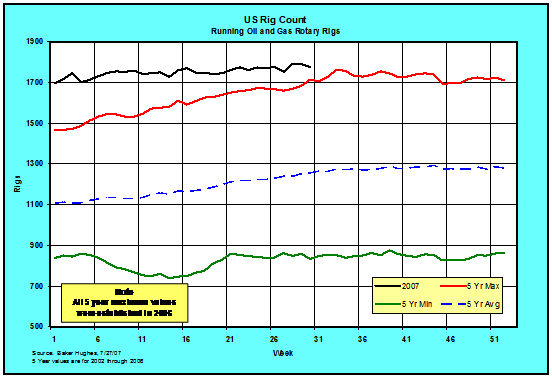
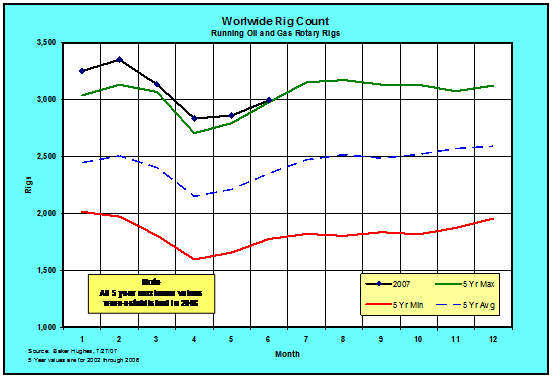
- Rotary rig count remains above five-year highs
- Crude imports are above five-year average levels
- Moderate summer weather
- Bullish
- OPEC production cuts
- Continuing geopolitical uncertainty
- Very little excess production capacity
- Increasing Chinese demand
- Weak dollar
- Start of the hurricane season
Price Trends
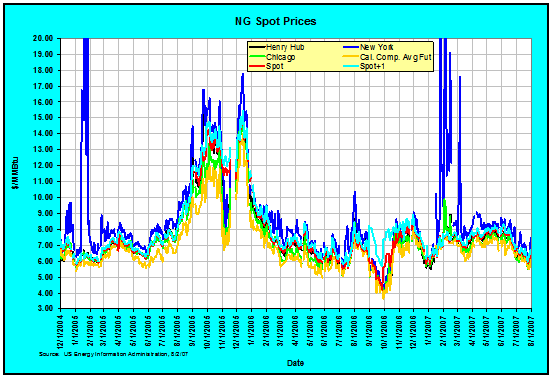
Extremely cold winter weather gripped much of the country during February and blizzard conditions pounded the northeast. These severe conditions drew down natural gas in storage and drove up spot energy prices, especially in New York.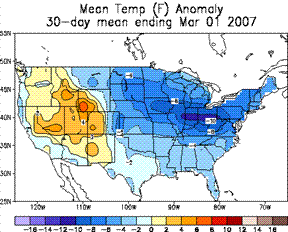
However, occurring so late in the season, the severe February weather did not have any lasting impact on energy costs. In fact, with a March that was considerably warmer than normal and a cool April, natural gas and electricity prices returned to the levels they were at before the cold winter. Continuing moderate weather has allowed storage figures to return to their five-year highs.
The weather over the past year has caused a number of major price surges, but they have all been relatively brief. The heat wave that gripped most of the country in July and August of 2006 necessitated the first summer net withdrawal from natural gas storage in 12 years of record keeping and drove energy prices up. Nothing similar has occurred this year.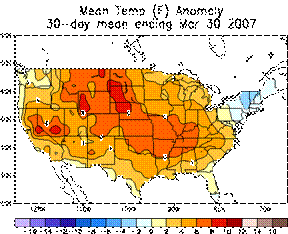
September brought relief with cool weather over much of the country which allowed significant injections to resume. Because of this, natural gas in storage remained well above five year averages.
Continuing cooler than normal weather led to a net withdrawal from storage during the last week of October, a bit early for such withdrawals to begin. Despite the withdrawal, storage levels were 272 BCF above the five-year average as the withdrawal season began. After a relatively mild November and warm December, storage levels remained above five-year highs despite cooler weather in January. Then the February cold snap drew storage levels below their five-year highs.
The charts that follow illustrate the movement of the energy markets. The first chart clearly illustrates the dramatic spikes in New York natural gas prices as February’s blizzard battered the Northeast. Now, with the return of moderate weather, New York prices have returned to their previous levels.
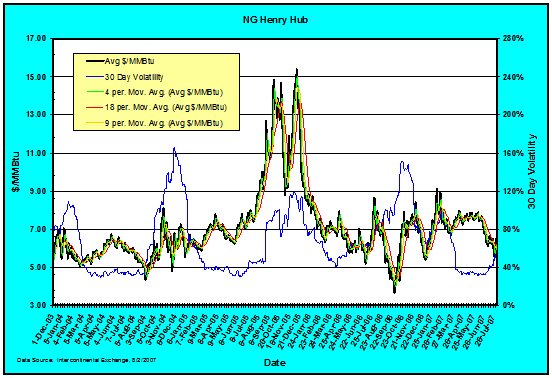
The weather induced price variations also brought higher volatility to natural gas prices. The heat wave of last summer and the late winter cold snap were both accompanied by increased volatility in natural gas prices. In recent months, natural gas prices have stabilized and price volatility is currently fairly low.
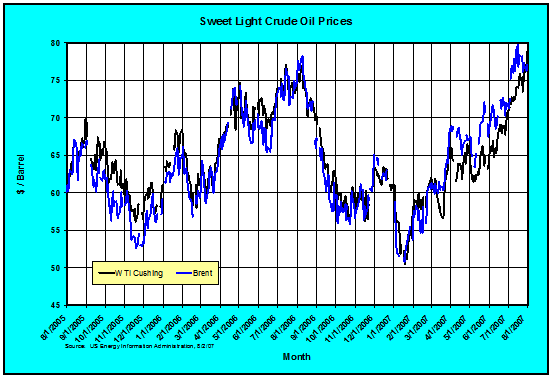
As with natural gas, crude oil prices have responded to the severe weather. Unlike natural gas, supply concerns kept crude prices high through the summer of 2006. Then, with a sense of increasing stability and high production and storage levels, oil prices started a steady decline into the fall when the cool October stopped the decline. Falling prices prompted OPEC production cuts which tended to arrest the decline. The arrival of cold weather in February and continuing supply concerns continue to push crude prices up.
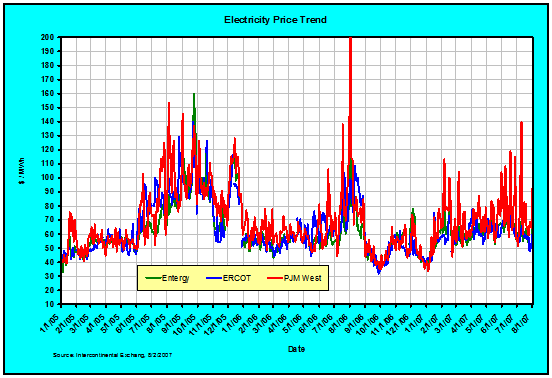
Since gas and, to a lesser extent, oil are the primary fuels used to meet variable electricity demand (base demand is typically met with coal, hydro, and nuclear), their costs (particularly those of natural gas) are reflected in the price of electricity.
Together, these charts illustrate the relationship between natural gas and crude oil prices and their impact on electricity costs. A number of factors, including those mentioned earlier, have contributed to these price trends. Other factors are examined in more detail below.
Production Trends
Natural gas and crude oil influence each other and also tend to drive the price of electricity. For this reason, their production and inventories are important, not only in their own right, but also to help understand and anticipate electricity price changes.
Several years ago, both natural gas in storage and crude oil stocks were at very low levels. This contributed to escalating prices. Higher prices encouraged production increases that have brought inventories well above average levels. In September of 2004, Gulf of Mexico production shut-ins resulting from hurricane Ivan helped to quickly draw crude oil inventory levels below five-year lows. With the return of production, and steady imports, inventories were restored and stocks built to well above five-year highs. Then, in the aftermath of hurricanes Katrina and Rita, these stocks again were drawn down, but the mild winter of 2005/06 allowed them to rebuild quickly.
With strong inventories and a quiet 2006 hurricane season, the energy markets have responded with some softening in prices.
The following charts show that, with high prices, the number of oil and gas rigs in the U.S. and worldwide remains above the five-year highs that were established just last year.
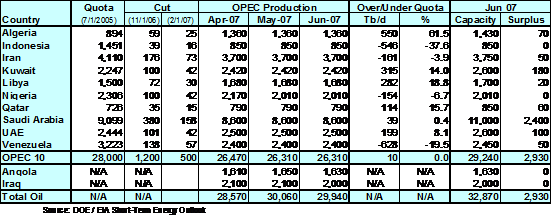
In fact, even with their recent cuts, OPEC production remains slightly above their quotas and there is still little surplus capacity. As the following table shows, most OPEC countries are still operating near their capacity. Only Saudi Arabia has significant surplus capacity.
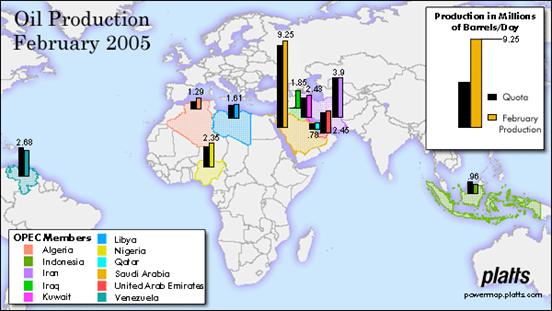
The following graphic and table illustrate the relative level of OPEC oil production by country.
OPEC Oil Production
(Thousands of Barrels per Day)
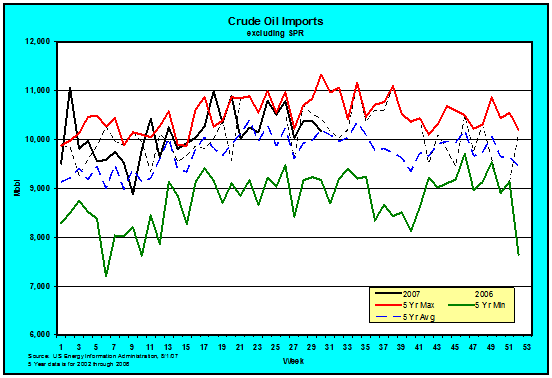
In addition to the high rig counts, oil imports have remained at very high levels despite high prices. In fact, they have been near the maximum level of the prior five years most weeks since the summer of 2004 except when the 2005 hurricanes interrupted access to port facilities in the Gulf of Mexico. They have only recently declined near to average levels.
Crude oil import levels are illustrated in the following chart.
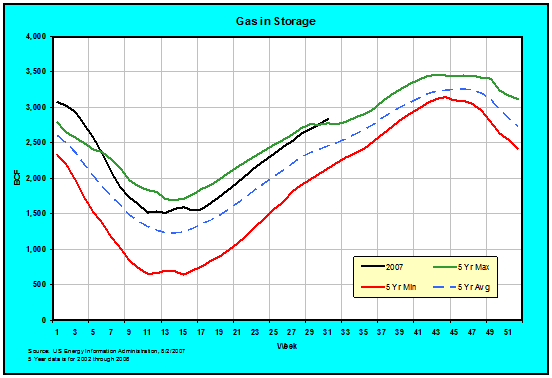
The next chart shows that, despite the 2005 hurricanes and the summer heat wave, mild weather that followed allowed gas in storage to rebuild to well above the maximum level of the prior five years. February’s cold snap drew storage levels below their five-year highs but, with moderating weather, they have rebuilt and are now at new five-year highs.
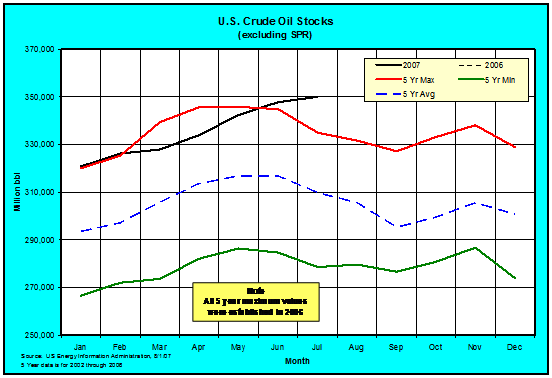
For most of the past year, until the February cold weather and resulting draw down, crude oil stocks exceeded the highest levels of the previous five years. Now, due to the factors mentioned previously, they are again above the five year maximum established just last year.
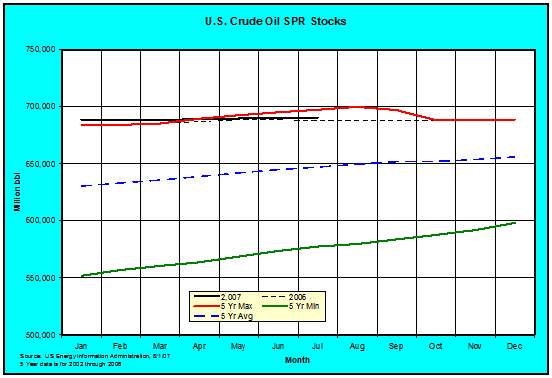
Despite draw downs following the hurricanes and other supply interruptions, the U.S. strategic petroleum reserve is also at a very high level and remains near the maximum level for the prior five years.
Conclusions
The February cold snap brought large, localized, surges in energy prices but, except for oil, prices have now returned to their previous levels. Last summer, with unusually hot weather, tensions in the Middle East, and fears associated with the start of the first hurricane season following Katrina, energy prices climbed. However, strong fundamentals, along with a calm hurricane season and mild start to the winter, moderated energy prices during the start of the heating season. Now, after the brief surge in February, energy prices have again moderated.
The current, moderate, prices could be pushed higher by a number of factors including:
- new supply disruptions,
- severe late summer weather,
- an active hurricane season,
- continuing weakening of the dollar,
- declining production by Russia or other major producers,
- more OPEC production cuts,
- speculation based on uncertain geopolitical and market conditions.
Considering all of these factors, if the international geopolitical situation remains relatively calm, and if we escape any serious hurricanes in the Gulf of Mexico, energy prices should decline moderately as we enter the fall.
|